In the field of modern construction engineering, steel structures have become the core preferred structural form for high-rise buildings, large-span venues, and industrial plants, supporting the sturdy framework of modern architecture, thanks to their excellent mechanical properties, industrialized construction advantages, and green, eco-friendly characteristics. Compared with traditional brick-concrete and concrete structures, steel structures have completely overcome the construction limitations and performance shortcomings of traditional buildings, adapting to various complex sites and diverse architectural needs, making them the core carrier of building industrialization upgrades.
The core advantage of steel structures lies in their remarkable mechanical properties, strong load-bearing capacity, and light weight. Steel material is uniform and high in strength. Under the same load-bearing conditions, the cross-section of steel structural members is far smaller than that of concrete members, and the overall building weight can be reduced by more than 30%, effectively reducing the foundation load and perfectly adapting to complex construction sites such as soft soil, mountainous areas, and coastal areas. At the same time, steel possesses ideal plasticity and toughness. When an earthquake occurs, it can dissipate impact forces through its own deformation. Its seismic and impact resistance performance far exceeds that of traditional structures, offering higher safety redundancy, making it widely applicable to construction projects in high-intensity seismic zones.
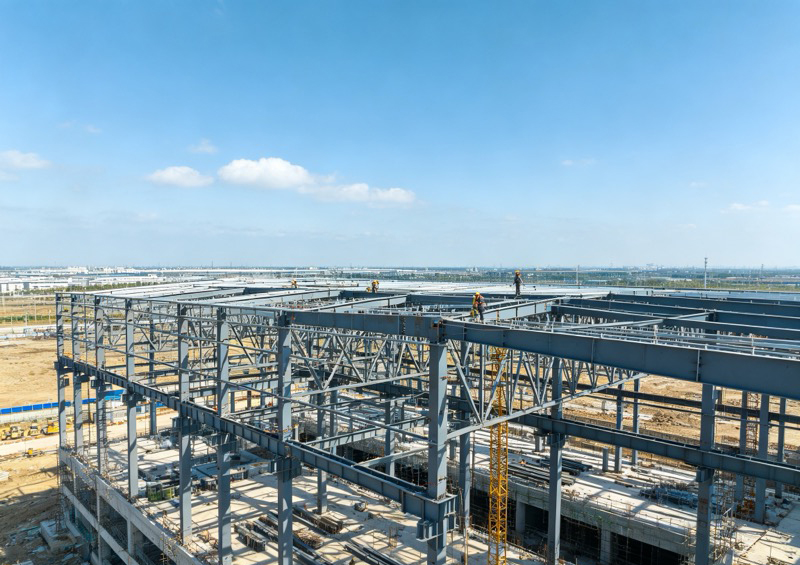
Industrialized prefabricated construction is a core highlight of steel structures. All components such as steel columns, steel beams, and trusses are standardized and prefabricated in factories with precise processing. After anti-corrosion and fireproof treatments, they are transported to the site and formed simply by assembly and installation. Without the need for cumbersome formwork, pouring, and curing processes, the construction period is shortened by more than 50% compared to traditional buildings. High-rise steel structure buildings can achieve efficient construction of one floor every 6 days, greatly improving construction efficiency. The on-site dry construction method significantly reduces construction waste, dust, and sewage discharge, aligning with the low-carbon development concept of green buildings.
Flexible space adaptability and long service life are also prominent features of steel structures. Steel structures can easily achieve a column-free space design with a span of over a hundred meters, meeting the needs of large-space buildings such as gymnasiums, exhibition centers, airport terminals, and logistics warehouses. Classic buildings like the Bird's Nest and Daxing Airport both adopt steel structure systems. After professional anti-corrosion and fireproof coating treatments, steel structures are resistant to corrosion and aging, with a service life of over 50 years. Furthermore, post-maintenance is convenient, and renovation and expansion are simple.
Today, steel structures have comprehensively covered multiple fields including industrial buildings, public buildings, high-rise buildings, and prefabricated residences, combining four core values: safety, efficiency, environmental protection, and flexibility. With the advancement of building industrialization and green development, steel structure technology continues to iterate and upgrade, which will continuously promote the high-quality development of the modern construction industry and become the core support of urban construction and engineering construction.